
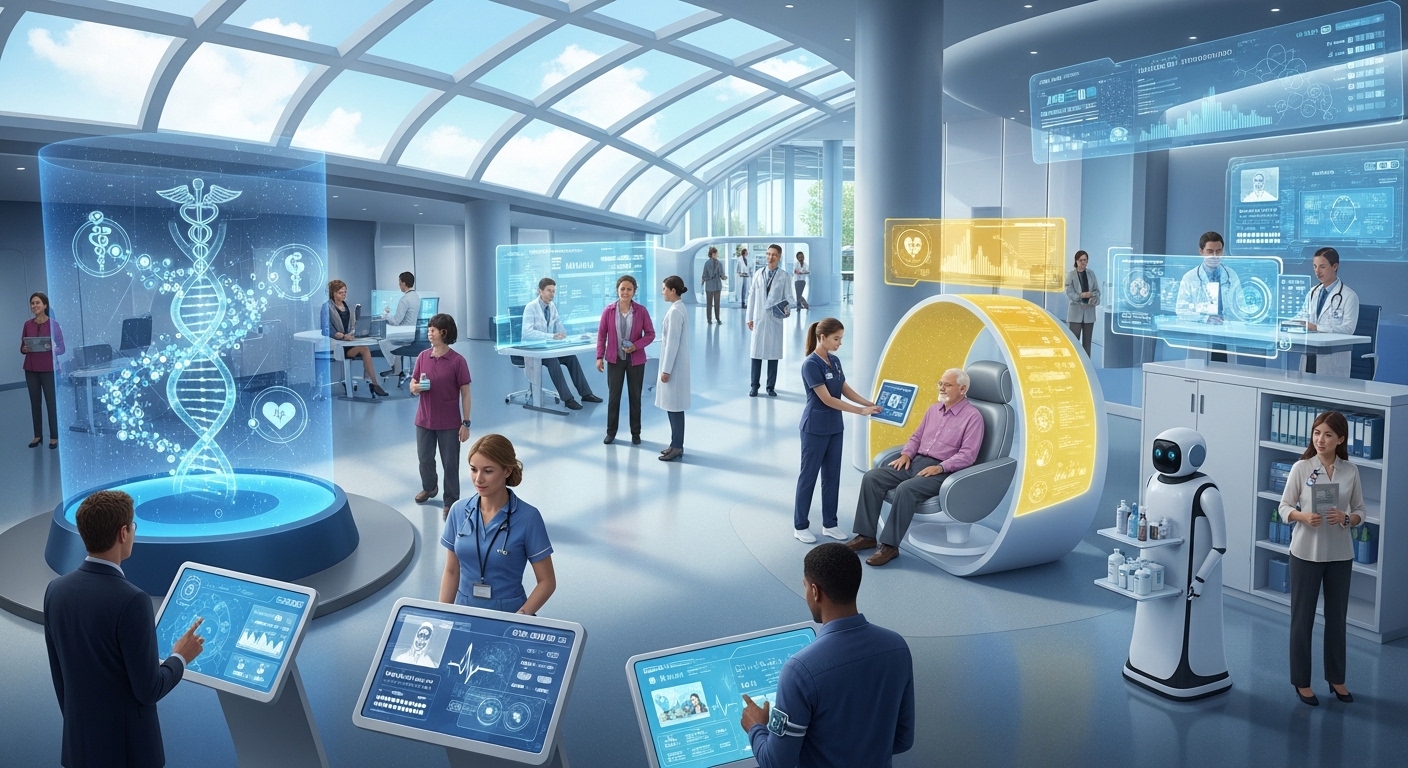
Global healthcare systems are undergoing a major transformation as advances in medical technology, artificial intelligence, biotechnology, and digital health solutions reshape how diseases are diagnosed, treated, and managed. These innovations are improving patient outcomes, increasing efficiency in hospitals, and expanding access to quality care across both developed and emerging economies worldwide.
Digital Transformation in Healthcare Systems
Electronic Health Records Expansion
Healthcare institutions are rapidly adopting electronic health records to streamline patient data management and improve coordination between medical professionals. These systems enhance accuracy, reduce paperwork, and allow faster access to patient history, improving diagnosis and treatment efficiency across hospitals and clinics worldwide.
Telemedicine Service Growth
Telemedicine is expanding rapidly as patients increasingly consult doctors through digital platforms. This approach improves healthcare accessibility, especially in remote areas, reduces hospital congestion, and allows faster medical consultations through video calls, mobile apps, and online healthcare systems.
Mobile Health Applications
Mobile health applications are transforming how individuals monitor and manage their health. These apps track fitness, chronic conditions, medication schedules, and vital signs, empowering patients to take a more active role in their healthcare management using real-time data.
Cloud Based Medical Systems
Cloud computing is enabling healthcare providers to store and access medical data securely from anywhere. This improves collaboration between hospitals, supports large-scale data analysis, and enhances the efficiency of healthcare delivery systems globally.
Digital Prescription Systems
Digital prescription systems are replacing traditional paper-based methods, reducing errors and improving medication management. Doctors can now send prescriptions directly to pharmacies, ensuring faster processing and improved patient safety across healthcare networks.
Artificial Intelligence in Medicine
AI Assisted Diagnosis
Artificial intelligence is helping doctors diagnose diseases more accurately by analyzing medical images, lab results, and patient histories. AI systems detect patterns that may be missed by humans, improving early detection of serious conditions such as cancer and heart disease.
Predictive Healthcare Analytics
Predictive analytics powered by AI is enabling healthcare providers to forecast disease outbreaks, patient risks, and treatment outcomes. This helps hospitals allocate resources efficiently and improve preventive care strategies across populations.
Medical Imaging Advancements
AI-powered imaging tools are enhancing the accuracy of X-rays, MRIs, and CT scans. These technologies assist radiologists in identifying abnormalities faster and with greater precision, improving diagnosis speed and treatment planning.
Drug Discovery Acceleration
Artificial intelligence is significantly speeding up drug discovery by analyzing biological data and identifying potential compounds. This reduces research time and costs, leading to faster development of new medicines and treatments.
Virtual Health Assistants
AI-driven virtual assistants are helping patients manage appointments, receive medical guidance, and monitor symptoms. These tools improve patient engagement and reduce workload for healthcare professionals.
Biotechnology and Medical Innovation
Gene Therapy Development
Gene therapy is revolutionizing treatment for genetic disorders by correcting defective genes at the molecular level. This innovation offers potential cures for previously untreatable diseases and is advancing rapidly in clinical research.
Personalized Medicine Growth
Personalized medicine tailors treatment plans based on individual genetic profiles, lifestyle, and medical history. This approach improves treatment effectiveness and reduces side effects, leading to better patient outcomes.
Regenerative Medicine Advances
Regenerative medicine focuses on repairing or replacing damaged tissues and organs using stem cells and bioengineering techniques. This field is opening new possibilities for treating chronic diseases and injuries.
Biopharmaceutical Innovations
Biopharmaceutical companies are developing advanced drugs using biological sources such as proteins and antibodies. These treatments are more targeted and effective for complex diseases like cancer and autoimmune disorders.
Vaccine Technology Improvements
Vaccine development has advanced significantly with new technologies such as mRNA platforms. These innovations allow faster production and improved effectiveness against infectious diseases.
Healthcare Infrastructure Improvements
Hospital Modernization Projects
Hospitals worldwide are upgrading infrastructure with advanced medical equipment, smart systems, and digital tools. These improvements enhance patient care quality and operational efficiency.
Smart Hospital Systems
Smart hospitals integrate IoT devices, AI systems, and automated workflows to improve patient monitoring and resource management. This leads to faster response times and better healthcare delivery.
Emergency Care Enhancements
Emergency care systems are being strengthened with advanced ambulances, real-time communication tools, and rapid response protocols to improve survival rates during critical situations.
Rural Healthcare Expansion
Healthcare access in rural areas is improving through mobile clinics, telemedicine, and government initiatives. This helps bridge the gap between urban and rural medical services.
Medical Supply Chain Optimization
Healthcare supply chains are becoming more efficient through digital tracking systems, ensuring timely delivery of medicines, equipment, and essential medical supplies.
Pharmaceutical Industry Progress
Advanced Drug Research
Pharmaceutical companies are investing heavily in research to develop innovative treatments for chronic and rare diseases, improving global healthcare outcomes.
Generic Medicine Expansion
The production of generic medicines is increasing, making essential treatments more affordable and accessible to populations worldwide.
Clinical Trial Innovations
Clinical trials are becoming more efficient through digital monitoring, AI analysis, and decentralized participation, speeding up the approval of new treatments.
Vaccine Production Scaling
Vaccine manufacturing capabilities are expanding globally to meet increasing demand for preventive healthcare solutions.
Precision Drug Targeting
Modern pharmaceuticals are focusing on precision targeting to deliver drugs directly to affected cells, reducing side effects and improving effectiveness.
Healthcare Accessibility and Global Impact
Universal Healthcare Efforts
Many countries are working toward universal healthcare systems to ensure all citizens have access to essential medical services regardless of income.
Insurance System Expansion
Health insurance coverage is expanding globally, helping individuals manage medical expenses and access better healthcare services.
Public Health Awareness
Public health campaigns are increasing awareness about disease prevention, hygiene, and healthy lifestyles, improving overall community health.
Global Health Collaboration
Countries and organizations are collaborating to address global health challenges such as pandemics, epidemics, and chronic disease management.
Medical Training Improvements
Healthcare education and training programs are evolving with advanced simulations, digital tools, and global knowledge sharing platforms.
Challenges in Modern Healthcare Systems
Rising Healthcare Costs
Healthcare expenses are increasing due to advanced treatments, technology adoption, and growing demand for medical services worldwide.
Data Privacy Concerns
The digitization of health records raises concerns about patient data security and privacy protection in healthcare systems.
Unequal Access to Care
Healthcare inequality remains a challenge, especially in developing regions with limited infrastructure and medical resources.
Workforce Shortages
Many healthcare systems face shortages of doctors, nurses, and skilled professionals, affecting service delivery quality.
Regulatory Compliance Issues
Healthcare providers must navigate complex regulations to ensure safety, quality, and legal compliance in medical practices.
Future of Healthcare Systems
AI Driven Healthcare Evolution
Artificial intelligence will continue transforming healthcare by enabling faster diagnosis, personalized treatments, and predictive care systems.
Fully Digital Hospitals
Hospitals of the future will rely heavily on digital systems, automation, and smart technologies to improve efficiency and patient care.
Global Health Integration
Healthcare systems will become more interconnected globally, allowing faster response to health crises and improved collaboration.
Preventive Medicine Focus
Future healthcare will prioritize prevention over treatment, using data analytics and monitoring tools to reduce disease risks.
Advanced Medical Innovation
Continuous innovation in biotechnology, robotics, and digital health will redefine global medical systems and treatment capabilities.
FAQs
How is AI changing healthcare?
AI improves diagnosis, treatment planning, and medical research efficiency.
What is telemedicine?
Telemedicine allows patients to consult doctors remotely using digital platforms.
Why is healthcare digitization important?
It improves efficiency, accuracy, and accessibility of medical services.
What are the biggest healthcare challenges?
Costs, inequality, data privacy, and workforce shortages are major challenges.
What is the future of healthcare systems?
Healthcare will become more digital, AI-driven, and preventive.
Conclusion
Healthcare advances are transforming global medical systems by improving diagnosis, treatment, and accessibility through technology and innovation. From AI-powered tools to digital hospitals, these changes are enhancing patient care and efficiency worldwide. Despite challenges, the future of healthcare is highly promising, moving toward smarter, more connected, and more preventive medical systems globally.
