
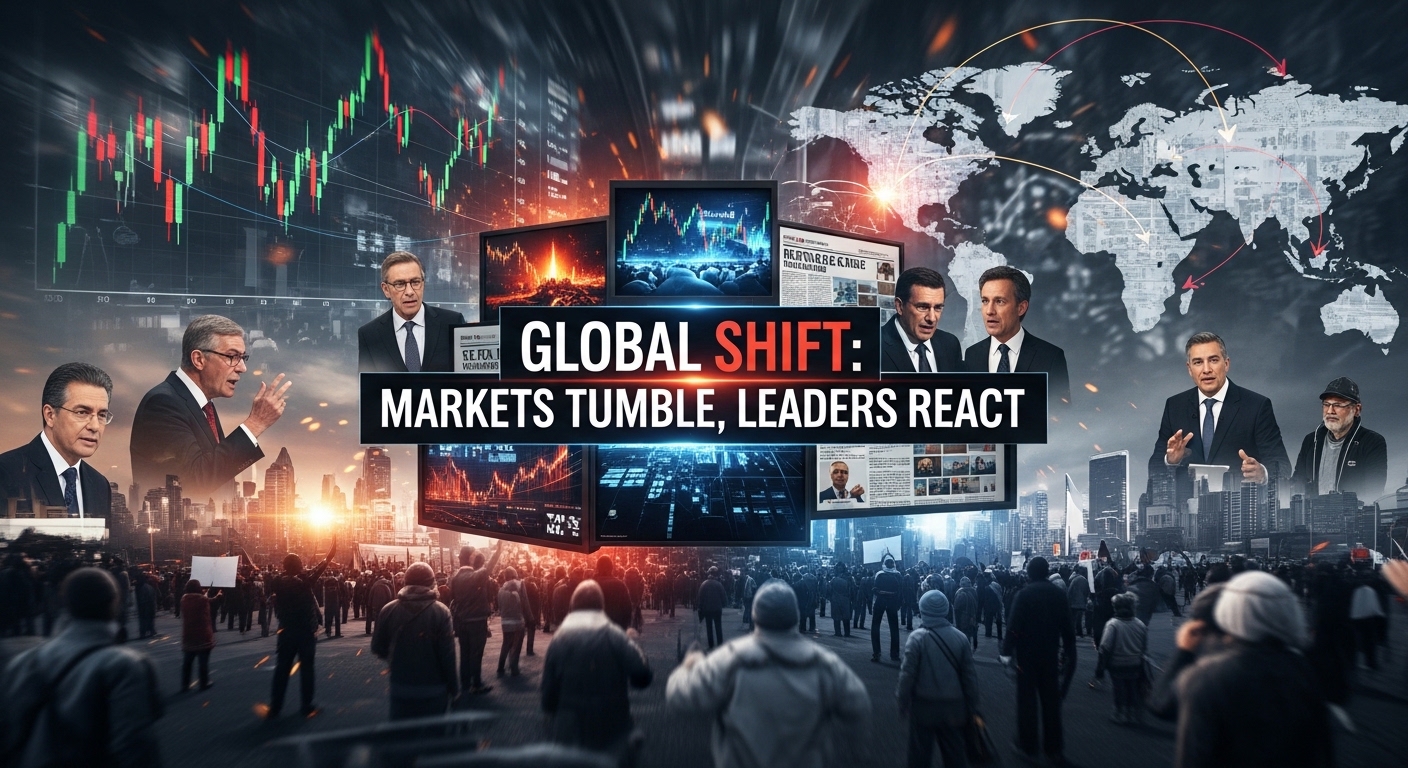
Global breaking news cycles are increasingly shaping economic and political decisions worldwide as information spreads instantly across digital platforms. Rapid reporting on conflicts, policy shifts, financial updates, and corporate developments influences markets, voter sentiment, and government responses, creating fast-moving global reactions that reshape stability and decision-making across interconnected economies.
Global Impact of Breaking News
Instant Market Reactions
Financial markets now react within seconds to breaking news events, including economic reports, geopolitical tensions, and corporate announcements. This instant response creates heightened volatility as traders adjust positions quickly based on new information, influencing global asset prices and investor behavior across interconnected financial systems worldwide today.
Political Decision Acceleration
Governments are increasingly forced to accelerate policy decisions in response to breaking news developments. Sudden geopolitical events, economic crises, or public unrest often require immediate responses, reshaping diplomatic strategies and domestic policies across nations as leaders attempt to manage fast-moving global situations effectively.
Public Sentiment Shifts
Public opinion is rapidly influenced by breaking news coverage, especially through digital and social media platforms. Citizens form immediate reactions to unfolding events, which can impact political approval ratings, social movements, and civic engagement across global societies experiencing continuous information flow and media exposure.
Media Influence Expansion
News organizations play a powerful role in shaping global narratives as breaking news spreads instantly worldwide. Media framing of events influences perception, interpretation, and emotional response, making journalism a critical driver of economic and political behavior across interconnected international systems and audiences today.
Information Speed Economy
The speed of information dissemination has become a key factor in global economic activity. Investors, governments, and businesses rely on real-time updates to make decisions, creating a fast-paced environment where timing and accuracy of news significantly impact financial outcomes and strategic planning worldwide.
Economic Consequences of Rapid News Flow
Market Volatility Increase
Frequent breaking news updates contribute to increased market volatility as investors react to uncertainty and rapidly changing conditions. Stock prices, commodities, and currencies fluctuate more sharply, reflecting heightened sensitivity to global events and real-time information flows across financial systems worldwide.
Investment Strategy Adjustments
Investors are constantly adjusting strategies based on breaking news developments, shifting portfolios to manage risk and capture opportunities. This dynamic environment encourages short-term trading behaviors while also emphasizing the importance of long-term diversification across global markets and asset classes.
Currency Exchange Fluctuations
Foreign exchange markets experience rapid fluctuations when breaking news affects economic indicators or geopolitical stability. Currency values shift quickly in response to investor confidence, central bank expectations, and international developments influencing global trade and financial stability.
Commodity Price Sensitivity
Commodity markets, including oil, gas, and agricultural products, are highly sensitive to breaking news events. Supply chain disruptions, geopolitical tensions, or weather-related updates can cause immediate price changes, affecting global production costs and economic stability.
Corporate Valuation Changes
Company valuations can change dramatically following breaking news related to earnings, leadership, or regulatory actions. Investors reassess risk and growth potential quickly, influencing stock performance and long-term market positioning across global financial exchanges.
Political Reactions to Global News
Policy Response Speed
Governments are responding more quickly to breaking news events, especially during crises or international conflicts. Rapid communication and decision-making processes are becoming essential to maintain stability and public trust in fast-changing political environments.
Diplomatic Engagement Shifts
International diplomacy is increasingly influenced by breaking news developments that require immediate coordination between nations. Governments adjust foreign policy strategies based on emerging events, strengthening or reevaluating alliances and global partnerships.
Crisis Management Systems
Crisis management systems are becoming more advanced as governments and organizations prepare for rapid response to breaking news situations. These systems include emergency communication networks, data analysis tools, and coordinated response frameworks.
Legislative Agenda Changes
Breaking news events can directly impact legislative priorities as governments shift focus toward urgent issues. Lawmakers often revise agendas to address economic shocks, security threats, or public concerns arising from major global developments.
Public Policy Communication
Clear and timely communication of policy responses is essential during breaking news events. Governments use multiple channels to inform citizens, manage expectations, and maintain trust during periods of uncertainty and rapid change.
Role of Digital Media and Technology
Social Media Amplification
Social media platforms significantly amplify breaking news, spreading information globally within seconds. This rapid dissemination increases engagement but also raises concerns about misinformation and the accuracy of early reports.
Algorithm Driven News Flow
Algorithms determine how breaking news is distributed across digital platforms, influencing what users see first. This shaping of information flow affects public perception, engagement, and understanding of global events.
Mobile News Consumption
Mobile devices have become the primary source of breaking news consumption worldwide. Instant notifications and real-time updates keep users continuously informed, increasing awareness but also contributing to information overload.
AI News Generation Tools
Artificial intelligence is increasingly used to generate and distribute breaking news content quickly. These systems improve speed and coverage but require careful oversight to ensure accuracy and reliability.
Digital Verification Systems
Fact-checking and verification technologies are evolving to combat misinformation in breaking news cycles. These systems help validate sources, confirm authenticity, and maintain trust in global information ecosystems.
Market Psychology and Investor Behavior
Fear Driven Trading
Breaking news often triggers fear-driven trading behavior, leading investors to sell assets quickly during uncertain events. This emotional response can intensify market volatility and short-term price swings.
Opportunity Seeking Investors
Some investors actively seek opportunities created by breaking news volatility, using rapid market movements to generate returns. This strategy requires high risk tolerance and quick decision-making abilities.
Herd Mentality Effects
Herd mentality becomes more pronounced during breaking news events as investors follow collective market movements. This behavior can amplify price trends and increase volatility across financial systems.
Risk Perception Changes
Breaking news alters how investors perceive risk, often leading to rapid portfolio adjustments. Perceived uncertainty can shift capital flows between safe and high-risk assets globally.
Long Term Strategy Balance
Despite short-term reactions, many institutional investors maintain long-term strategies to balance volatility created by breaking news cycles and maintain portfolio stability over time.
Global Communication and Information Networks
24 Hour News Cycle
The 24-hour news cycle ensures constant coverage of global events, increasing the speed at which breaking news influences economic and political decisions worldwide.
Cross Border Information Flow
Information now flows seamlessly across borders, enabling rapid global awareness of events and synchronized reactions in financial and political systems.
International News Collaboration
News agencies collaborate internationally to verify and distribute breaking news quickly, improving accuracy and reducing delays in global reporting.
Real Time Data Integration
Real-time data integration allows governments and businesses to make faster decisions based on live updates from global events and markets.
Crisis Communication Networks
Dedicated communication networks are used during crises to ensure accurate and timely dissemination of breaking news across countries and organizations.
Future Outlook of Breaking News Influence
Increased Information Speed
Future advancements will further accelerate the speed of breaking news dissemination, increasing real-time global responsiveness across economies and governments.
AI Driven News Analysis
Artificial intelligence will play a larger role in analyzing and predicting the impact of breaking news on markets and politics.
Greater Misinformation Challenges
As information spreads faster, challenges related to misinformation and verification will also increase, requiring stronger regulatory and technological solutions.
Hyper Connected Global Response
Global systems will become more interconnected, allowing faster coordinated responses to breaking news events affecting multiple regions simultaneously.
Evolving Media Responsibility
Media organizations will face greater responsibility in ensuring accuracy, transparency, and ethical reporting in an increasingly fast-paced news environment.
FAQs
How does breaking news affect financial markets?
It increases volatility as investors react quickly to new information.
Why do governments respond quickly to breaking news?
To manage crises, maintain stability, and protect national interests.
How does social media influence breaking news?
It spreads information instantly but can also amplify misinformation.
What is the biggest risk of rapid news cycles?
Misinformation and emotional decision-making in markets and politics.
Will AI change breaking news reporting?
Yes, AI will speed up analysis and distribution of news globally.
Conclusion
Breaking news plays a powerful role in shaping global economic and political changes by influencing markets, governments, and public opinion in real time. As information spreads faster than ever, its impact on decision-making continues to grow. While it improves awareness and responsiveness, it also increases volatility, making accuracy and responsible reporting more important for global stability.
