
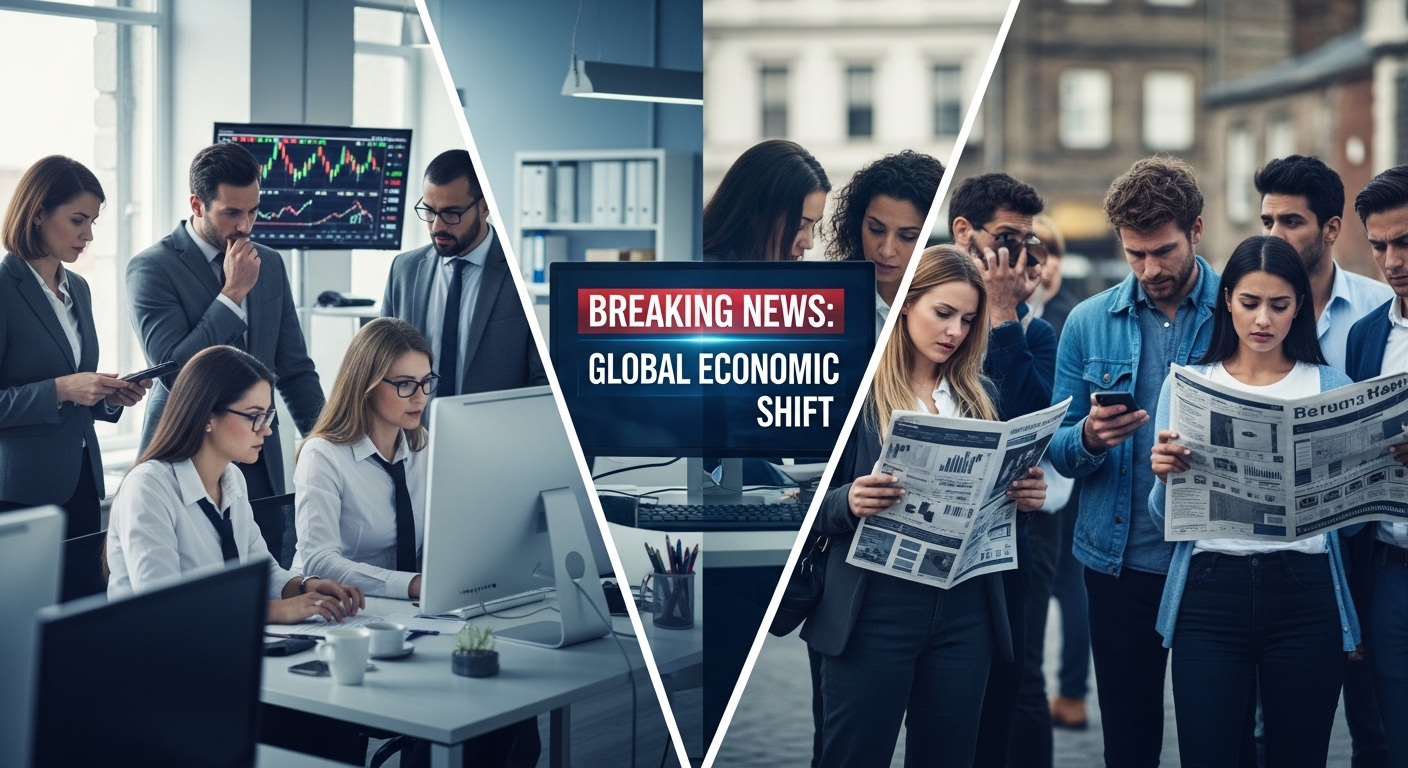
Global developments in recent news are having a wide-ranging impact on business, finance, and society, as economic uncertainty, technological disruption, geopolitical tensions, and environmental risks reshape how markets and communities function. Across industries, decision-makers are adapting to rapid change while balancing growth opportunities with rising instability in the global environment.
Economic Shifts and Market Volatility
Inflation and Cost Pressures
Recent news highlights persistent inflationary pressures that continue to affect businesses and households worldwide. Rising energy prices, supply chain disruptions, and higher borrowing costs are increasing operational expenses, forcing companies to adjust pricing strategies while consumers face reduced purchasing power across global economies today.
Financial Market Fluctuations
Financial markets are reacting sharply to global news events, including geopolitical tensions and policy shifts. Stock indices and currencies experience volatility as investors reassess risk exposure, leading to rapid capital movements and changing valuations across major sectors and international markets worldwide today.
Interest Rate Uncertainty
Central bank decisions remain a key driver of uncertainty in financial systems as interest rates fluctuate in response to inflation and economic conditions. Higher borrowing costs impact business expansion, housing markets, and investment flows, creating tighter financial conditions across global economies today.
Investment Behavior Changes
Investors are becoming more cautious due to global instability, shifting portfolios toward safer assets such as bonds and gold. Risk management strategies are increasingly important as market participants respond to unpredictable news cycles and changing macroeconomic conditions worldwide today.
Global Trade Slowdown
International trade is slowing as supply chain disruptions and geopolitical tensions affect the movement of goods and services. Exporters and importers face delays, higher costs, and reduced efficiency, impacting global economic growth and business profitability across interconnected markets today.
Corporate and Business Impact
Corporate Earnings Pressure
Companies are experiencing pressure on earnings due to rising costs, weaker demand in some sectors, and global uncertainty. Businesses are adjusting strategies to maintain profitability while navigating unpredictable economic conditions and fluctuating consumer behavior across global markets today.
Layoffs and Restructuring Trends
Recent news shows increasing layoffs and corporate restructuring as companies adopt automation and AI technologies. Organizations are reducing workforce costs and reorganizing operations to improve efficiency, reflecting broader shifts in global labor markets and business models today.
Supply Chain Disruptions
Businesses continue to face supply chain disruptions caused by geopolitical instability, transportation delays, and resource shortages. These challenges increase production costs and reduce operational efficiency, forcing companies to diversify suppliers and rethink global logistics strategies.
Mergers and Strategic Alliances
Firms are increasingly engaging in mergers and strategic partnerships to strengthen market positions and reduce competition. Consolidation helps companies improve efficiency, expand market share, and adapt to rapidly changing global business environments.
Technology Investment Growth
Despite uncertainty, businesses are increasing investment in digital technologies such as artificial intelligence, automation, and cloud computing. These technologies are seen as essential for long-term competitiveness and productivity improvements across global industries.
Technological Transformation
Artificial Intelligence Expansion
AI continues to transform industries by improving automation, data analysis, and decision-making processes. Businesses are integrating AI tools to increase efficiency, reduce costs, and enhance customer experiences across global markets.
Semiconductor Demand Surge
Semiconductor demand is rising sharply due to growth in AI, cloud computing, and advanced electronics. Supply shortages and production constraints are affecting global technology supply chains and increasing competition among manufacturers.
Digital Platform Growth
Digital platforms are expanding rapidly as consumers and businesses increasingly rely on online services for communication, commerce, and entertainment. This growth is reshaping industries and creating new economic opportunities worldwide.
Cybersecurity Risks Increase
As digital adoption increases, cybersecurity risks are also rising, with more frequent data breaches and cyberattacks reported in global news. Businesses and governments are investing heavily in security infrastructure to protect sensitive information.
Automation in Workforce
Automation technologies are changing labor markets by replacing repetitive tasks and increasing productivity. While improving efficiency, this shift is also raising concerns about job displacement and workforce adaptation.
Geopolitical and Policy Influence
Rising Global Tensions
Geopolitical tensions between major economies are influencing trade, investment, and diplomatic relations. These tensions create uncertainty in global markets and affect business confidence across multiple industries.
Trade Policy Changes
Government policy changes related to tariffs, sanctions, and trade agreements are reshaping international commerce. Businesses must adapt quickly to regulatory shifts that impact supply chains and market access.
Energy Security Concerns
Energy supply disruptions and geopolitical conflicts are raising concerns about global energy security. These developments influence pricing, inflation, and industrial production worldwide.
Regulatory Uncertainty
Frequent regulatory changes across countries are creating compliance challenges for multinational companies. Businesses must continuously adapt to evolving legal frameworks and governance standards.
Global Cooperation Challenges
International cooperation is becoming more complex as nations prioritize domestic interests. This fragmentation affects global problem-solving efforts in trade, climate change, and economic stability.
Social and Labor Market Changes
Workforce Transformation
The global workforce is undergoing transformation due to automation, remote work, and digital skills demand. Employees are adapting to new job requirements and changing workplace structures.
Income Inequality Concerns
Recent news highlights growing concerns about income inequality as economic growth becomes uneven across regions and industries. This gap is influencing social stability and policy discussions worldwide.
Cost of Living Pressures
Rising costs of housing, food, and energy are affecting households globally. These pressures are reducing disposable income and changing consumer behavior across economies.
Remote Work Expansion
Remote and hybrid work models continue to expand, reshaping corporate culture and productivity patterns. Businesses are redesigning operations to accommodate flexible work environments.
Education and Skill Demand
Demand for digital and technical skills is increasing as industries evolve. Education systems and training programs are adapting to prepare workers for future job markets.
Environmental and Sustainability Impact
Climate Risk Awareness
Recent global news emphasizes growing climate-related risks, including extreme weather events and environmental degradation. These issues are influencing business strategies and government policies.
Energy Transition Acceleration
The shift toward renewable energy sources is accelerating as countries aim to reduce carbon emissions. This transition is reshaping energy markets and investment priorities.
Corporate Sustainability Pressure
Companies are facing increased pressure to adopt sustainable practices and report environmental impact. Investors and consumers are demanding greater transparency and accountability.
Resource Scarcity Challenges
Scarcity of natural resources is affecting industries such as agriculture, manufacturing, and energy. Businesses are seeking more efficient and sustainable resource management solutions.
Green Technology Innovation
Investment in green technologies is growing as companies develop cleaner energy solutions, electric vehicles, and sustainable production methods to support long-term environmental goals.
Future Outlook and Global Adaptation
Economic Uncertainty Outlook
Global economic uncertainty is expected to continue as markets adjust to inflation, geopolitical risks, and technological disruption. Businesses are preparing for ongoing volatility.
Innovation-Driven Growth
Despite challenges, innovation in technology and digital transformation is driving new growth opportunities across industries and economies worldwide.
Policy Adaptation Strategies
Governments and institutions are developing new policies to manage economic instability and technological change while supporting sustainable growth.
Business Resilience Building
Organizations are focusing on resilience strategies, including diversification, digital transformation, and risk management to survive future shocks.
Global System Transformation
The combined impact of economic, technological, and geopolitical changes is reshaping global systems, creating a more complex but interconnected world economy.
How do global news events affect business?
They influence market stability, investment decisions, and corporate strategies across industries.
Why do financial markets react to news quickly?
Because investors adjust expectations based on new economic and geopolitical information.
How does technology news impact society?
It changes jobs, communication, and daily life through innovation and automation.
Why is uncertainty increasing globally?
Due to geopolitical tensions, inflation, and rapid technological transformation.
Can businesses adapt to global changes?
Yes, through innovation, diversification, and digital transformation strategies.
Conclusion
Recent global news is reshaping business, finance, and society through economic volatility, technological disruption, and geopolitical uncertainty. While challenges such as inflation, supply chain risks, and regulatory changes persist, innovation and adaptation are driving resilience. The global system is evolving rapidly, requiring businesses and societies to remain flexible, informed, and forward-looking in an increasingly interconnected world.
